This route has been living in my head for over a year. Not as a fantasy — as a mission. I've been mapping waypoints at 3AM, reading border crossing reports, calculating fuel ranges between Saharan stations, and studying the riders who've actually done it. This is the ride that will change everything.
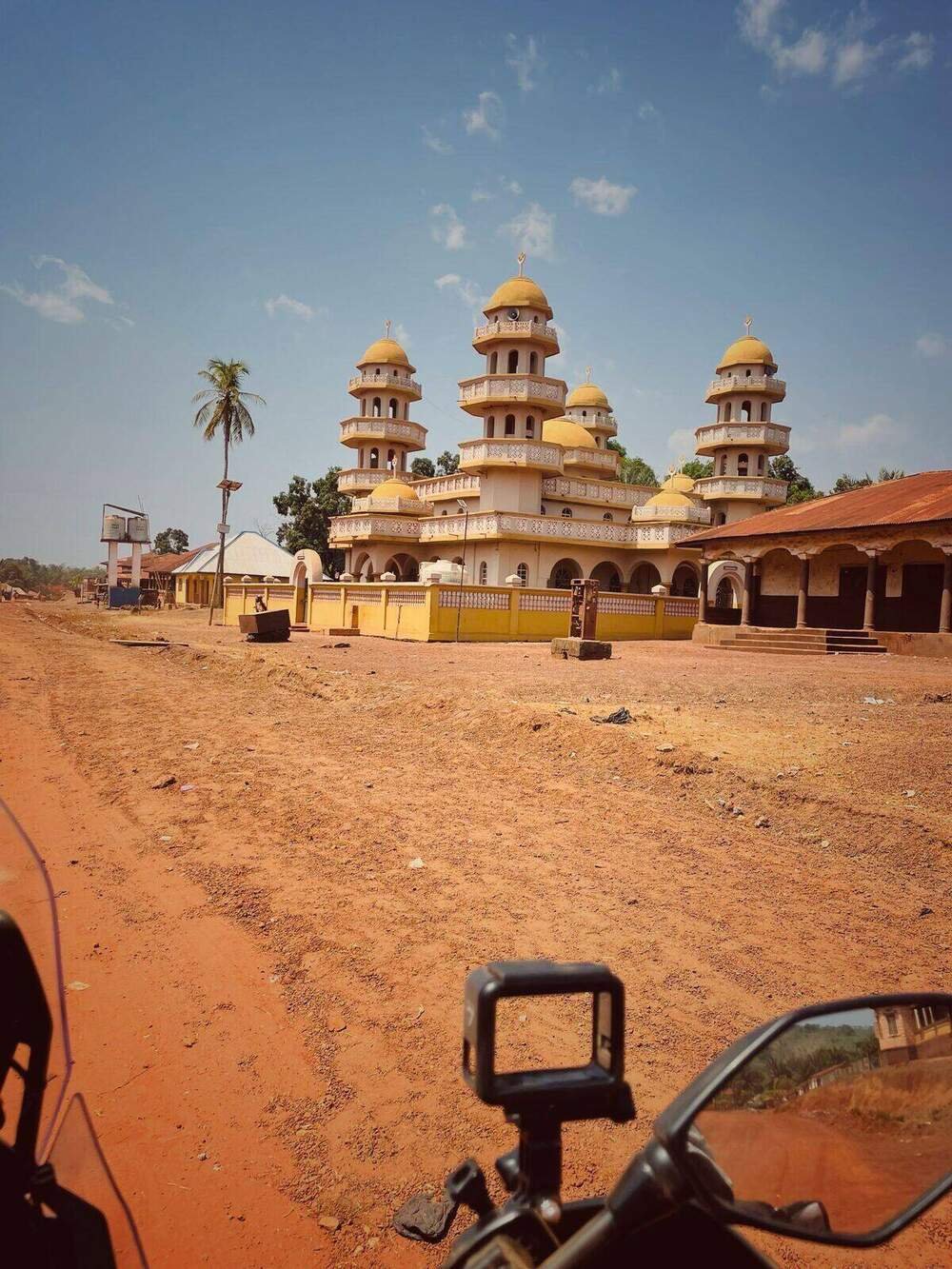
Rubia's mosque, on the road between Makeni and Kabala, Sierra Leone. Photo: Sven Vandenbroucke / Motorcycle-Diaries.com
The Inspiration
The fire was lit by two riders — Philip Tonks and Sven Vandenbroucke. They called their journey "Pumwee on Wheels" — "Pumwee" being a Mendé word from Sierra Leone meaning "man from on the other side of the horizon." They shipped their bikes to Freetown, spent months preparing, survived COVID delays, and finally set off on a 9,000 km journey from West Africa all the way back to Belgium and the UK. Their story, published on Motorcycle-Diaries.com, rewired my brain about what's possible on two wheels.
Philip and Sven first met working on a plantation in Sierra Leone back in 2012. In their free time, they explored the jungle by kayak, 4x4, bicycle, and motorbike. Then one evening at the plantation club, over a few beers, the idea was born: ride home from Sierra Leone to Europe by motorcycle. The seed was planted and never left.
Philip shipped a Honda Africa Twin Adventure Sports 1100 from South Africa. Sven first brought a Royal Enfield 400cc from Belgium, sold it when COVID hit, and later chose the Yamaha Ténéré 700 — lighter and more agile for the off-road sections ahead. On April 26th, they finally left on their adventure.
Sierra Leone
The journey begins in Freetown and heads north through Makeni and Kabala toward the Guinea border. Afternoon temperatures easily hit 40°C in the open plains. Massive bush fires can be seen from miles away during the dry season. GPS doesn't always work here, and the maps aren't always accurate — you stop often to check if you're still on the right track.
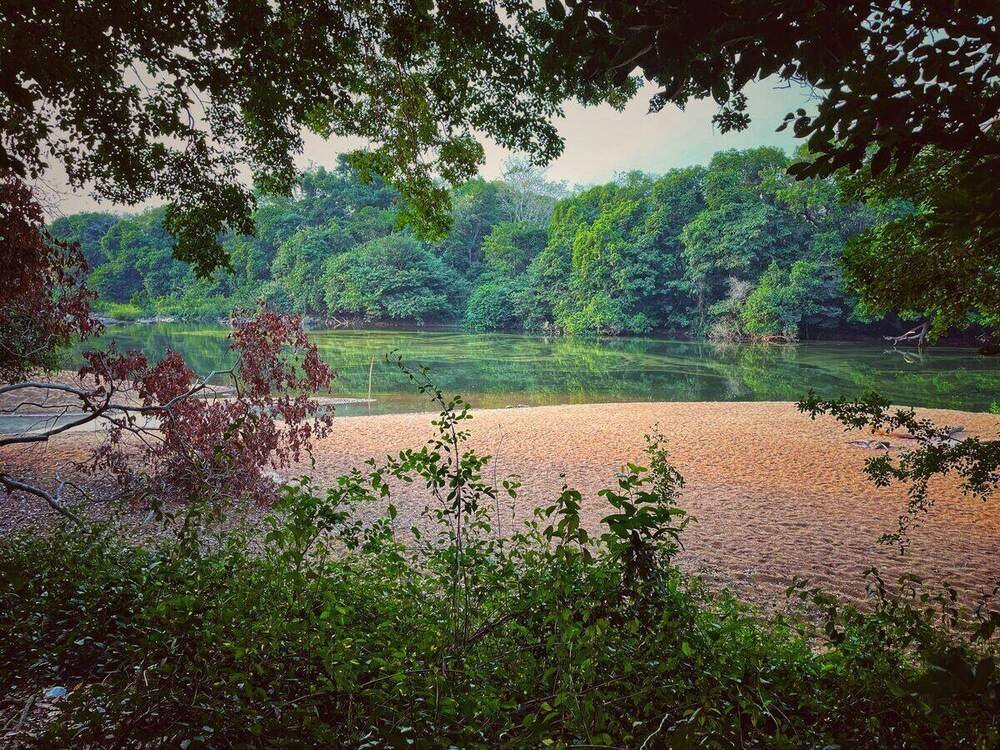
Outamba-Kilimi National Park — camping by the Kilimi River after a full day of off-road riding. Photo: Sven Vandenbroucke / Motorcycle-Diaries.com
The route passes through Outamba-Kilimi National Park, home to chimpanzees, colobus monkeys, pygmy hippos, elephants, and countless bird species. After a punishing day of off-road riding, you can camp by the Kilimi River for a small fee to the rangers — and jump in to wash the dust off. No crocodiles around, hopefully.
River crossings in Sierra Leone are unpredictable. Bridges on the map may no longer exist, or be in such bad shape that crossing is impossible. Sometimes there's a ferry — but in dry season it can't reach the riverbank, and you end up riding through the river over slippery stones with a fully loaded 300kg bike. That's where it gets real.
"We had to ride the first part through the river over very slippery stones. With a fully loaded 300kg bike, it was a bit of a gamble — but with some luck, we mastered it."
Guinea Conakry
Crossing the border at Sanya into Guinea is an experience in itself. Armed military sit under a tree in the shade. They look tough at first, but the moment you start small talk — mentioning you've worked in the country, talking about life in Africa — they warm up instantly.
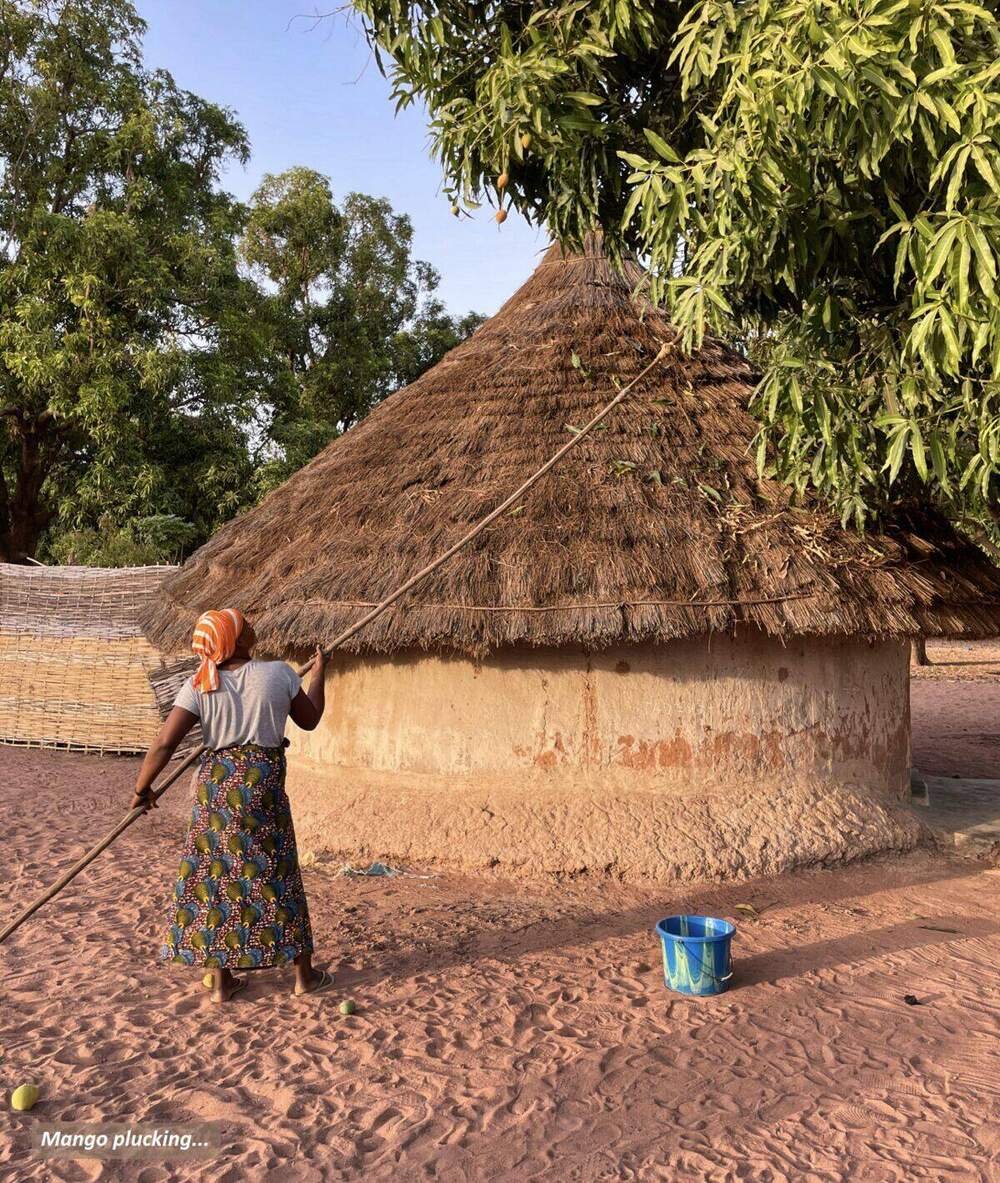
A typical Guinean village — mud huts are used mostly for sleeping, kept completely closed during the day to keep the heat out. Photo: Sven Vandenbroucke / Motorcycle-Diaries.com
Inside a concrete building, the immigration officer sits behind a wooden desk under a fan. He takes your papers and starts discussing a "very important missing stamp" with his colleague — knowing full well you understand French. You brace for the worst... and then he stamps your passport and waves you through. Africa keeps you on your toes.
After the border, the roads turn into dusty tracks lined with logging trucks. You ride for hours behind walls of dust, unable to see five meters ahead. Overtaking on these roads with oncoming traffic is a calculated gamble every single time.
The Route Plan
Planned Route Segments
- Leg 1: Sierra Leone — Freetown → Makeni → Kabala → Outamba-Kilimi National Park (off-road, 40°C, bush fires)
- Leg 2: Guinea Conakry — Border at Sanya → Koundara → dusty roads, logging trucks
- Leg 3: Senegal / Gambia — West coast run, Dakar as resupply point
- Leg 4: Mauritania / Western Sahara — The Sahara stretch. Fuel range critical. Water bags essential.
- Leg 5: Morocco — Atlas Mountains, finally paved roads after thousands of km of dust
- Leg 6: Spain → France → Belgium — Ferry from Tangier, European highways to the finish line
What I Need to Prepare
- Bike: Yamaha Ténéré 700 — lighter and more agile for off-road, proven on this exact route. The Africa Twin is the alternative for more power when fully loaded.
- Fuel range: Minimum 400 km for Saharan stretches. Jerry cans or auxiliary tank, no exceptions.
- Water: 10–15 liters minimum for desert segments. Hydration bladder inside the riding jacket.
- Documents: Visa requirements change at every border. Carnet de passage is essential. Guinea taught us that "creative diplomacy" is sometimes required.
- Tires: Dual-sport — not full knobbies, not full road. Practice tire changes before departure.
- Navigation: GPS + offline phone maps + paper maps as backup. GPS failed in parts of Sierra Leone; maps were inaccurate in Guinea.
- Camping: Emergency food packs, proper sleeping gear, and everything packed with the right balance on the bike.
My Timeline
Dry season in West Africa runs roughly November through April — that's the window. The plan: ship the bike to Freetown, fly in, and ride north. Total estimated time is 3–4 weeks if everything goes smoothly. With border delays and mechanical issues — which are guaranteed — expect 5–6 weeks.
This is the ride I'll do first. Everything else on my list depends on this one. If Philip and Sven could do it, starting from a plantation club conversation over beers, then there's no excuse. The route is marked. The research is done. The only thing missing is the road under my wheels.
Sources & Inspiration
- Pumwee on Wheels Part I — Motorcycle-Diaries.com — The original story by Sven Vandenbroucke that inspired this entire plan
- Motorcycle-Diaries.com Roads Database — Route research and waypoint planning
- Adventure Bike Rider — Sahara Crossing Guide — Desert preparation research